




James Rizzi is a dynamic artist/illustrator who lived in New York City. His animated art style, rich in detail and expression, has a massive following. The simple black lines with bold dashes of color make a perfect style for my students to imitate. Here are a few lessons to bring into your 5th and 6th grade classrooms.

OPTION ONE: JAMES RIZZI WATERCOLOR FACES
My 6th graders loved this lesson. I mean, loved! I used the 2012 James Rizzi Calendar to point out the various “Rizzi” art styles. I demonstrated a few faces on the whiteboard, starting with the iconic James Rizzi “eyes”.
Next, I drew the nose which resembles a fancy number 6 or an upside down number 7. The mouth was the most fun part. We talked about the middle line of the mouth being the most expressive and from there we altered the shapes of the mouth. We added teeth and sometimes a tongue. Nothing sassy here…James Rizzi drew lots of tongues!
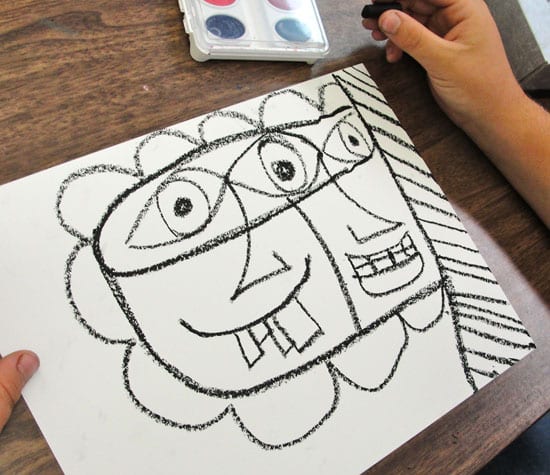
WHAT YOU’LL NEED:
I gave each student a 9 x 12″ Canson watercolor paper and a black oil pastel.
GETTING STARTED:
Drawing lightly with the oil pastel is encouraged at first, but the real secret to the success of this lesson is pressing a good dark line. This heavy oil pastel acts like a barrier to the watercolor paints so when the children paint inside the shapes, the colors don’t bleed. Cool!
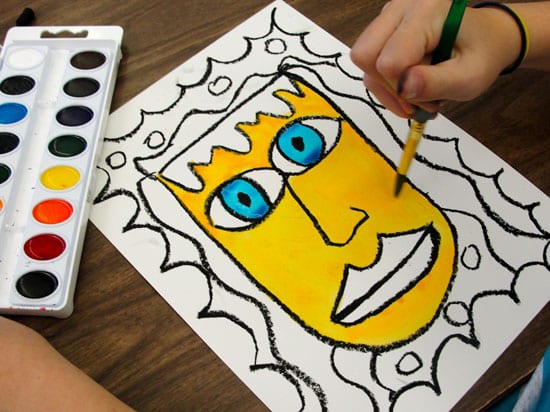
I’m so excited to announce that my new double sets of Prang watercolors work fantastic in this lesson. The extra palette of color combinations is a real time saver (no mixing) and gives a striking variety of colors to choose from. I’m so glad I tried them out as I was sure I would be a liquid watercolor convert for the rest of my life.
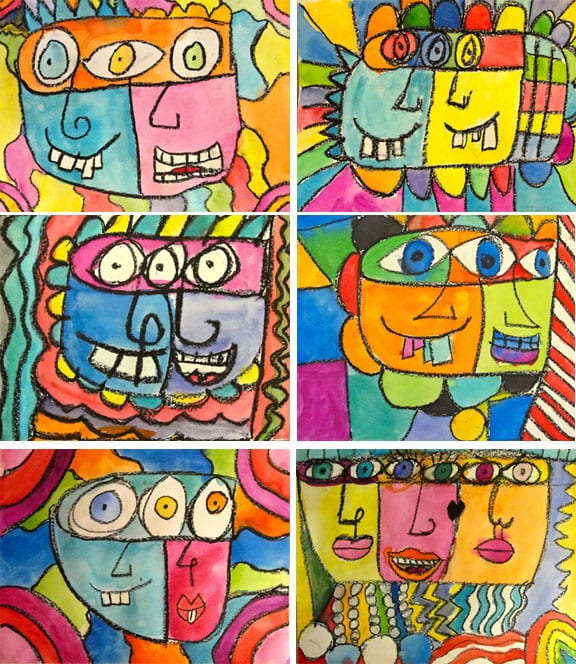
Sixth Graders used TWO @ 50-minute art lessons to learn about James Rizzi and complete this lesson.
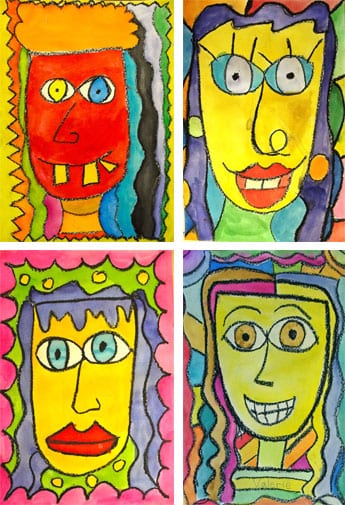
- Single James Rizzi Portraits
Teach art from a cart? Learn why this lesson is a great choice by downloading this free checklist and lesson guide!

OPTION TWO: JAMES RIZZI WATERCOLOR BIRDS
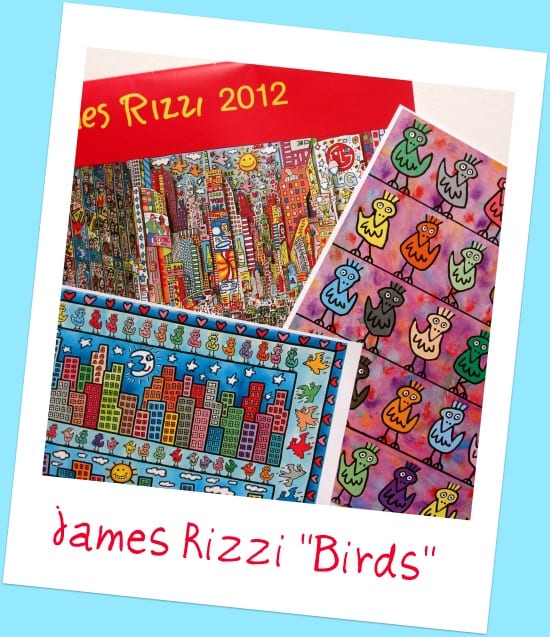
WHAT YOU’LL NEED:
9″ x 12″ piece of paper
Black oil pastel
Watercolor
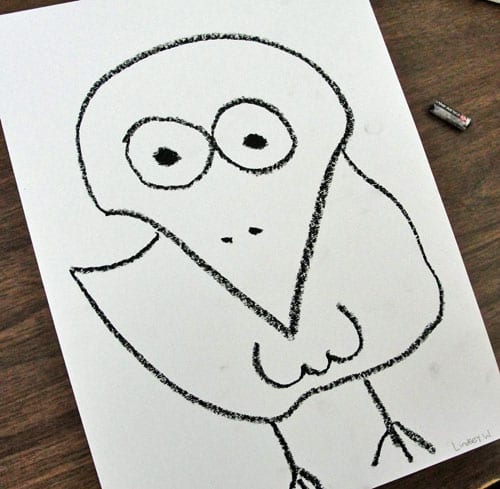
THIS IS WHAT WE DID:
We drew a very simple line drawing of Rizzi’s famous bird image on a 9″ x 12″ piece of watercolor paper.
Use a black oil pastel and start with two circles that touch in the middle. Add big dots for pupils.
Draw two dots for the nostrils then add a big upside-down letter “U” over the head.
Draw a letter “V” for the beak.
Add a body, fluffy feathers on the chest and finally, stick legs.
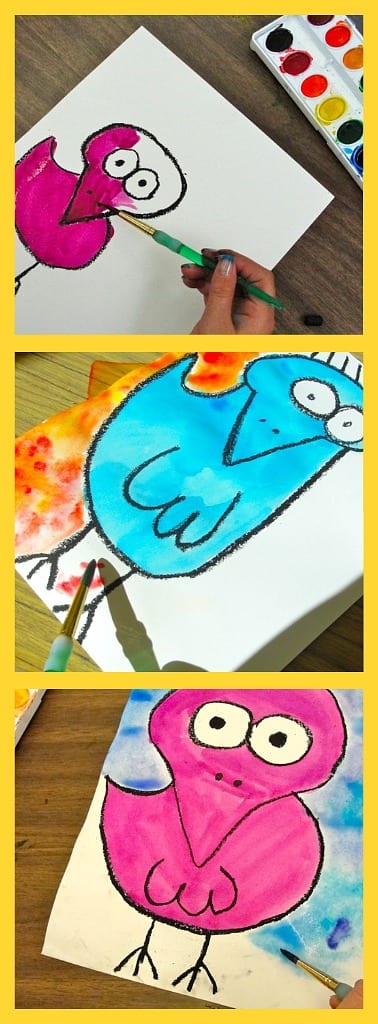
Use pan watercolor or liquid watercolors (easier) and paint the bird first.
Make sure the oil pastel line is dark and heavy. Not only will it add a graphic quality to your painting, it’ll act as a barrier for the watercolor paints.
Next, wet the background paper with water and dab on blotches of watercolor paint.
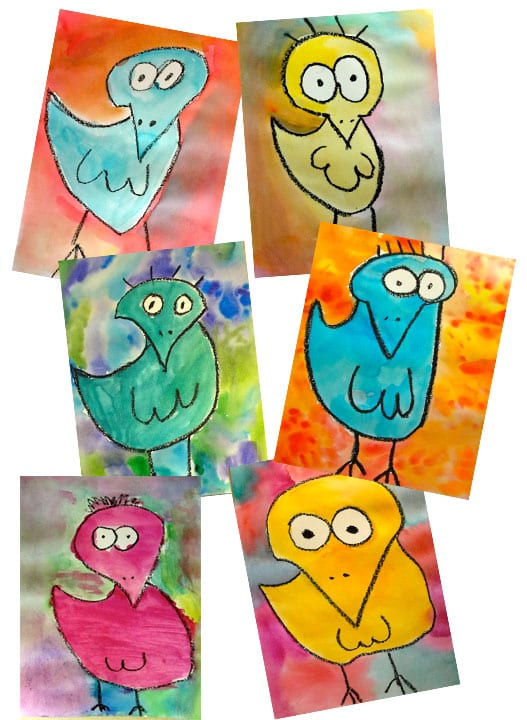
Done! How easy was that?
Fifth Grade Rizzi Birds (just as easily created with Kinders!)
OPTION THREE: James Rizzi Skyscraper
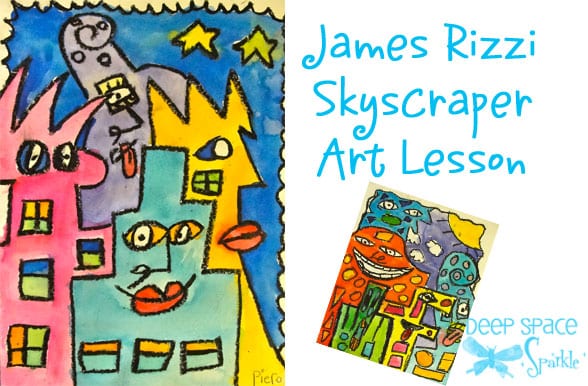
James Rizzi has left his mark on the world. His amazing illustrations has made an indelible impression on me and my students. Last Fall, my sixth graders did the units on James Rizzi including Faces and Simple Birds.. This time we had fun with James Rizzi Inspired Skyscrapers. This is a super easy lesson for older students. 100% fun and successful.
The technique is simple.
WHAT YOU’LL NEED:
Oil pastel
Watercolors
9″ x 12″ piece of paper
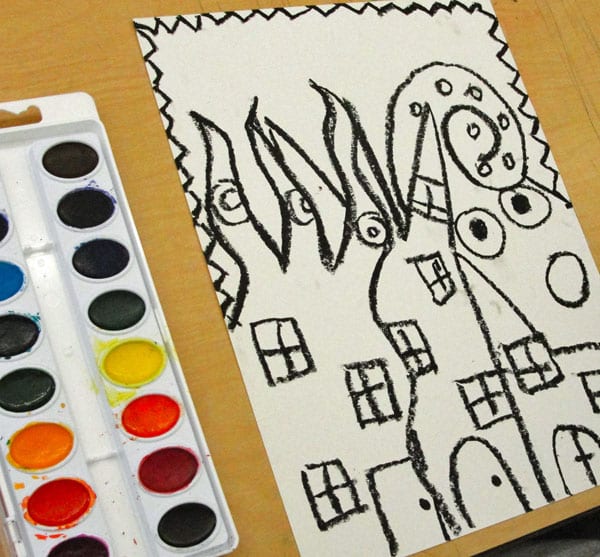
THIS IS WHAT WE DID:
I think it’s important to use watercolor paper, no matter what the quality, as that is what makes the project so vibrant. If you use regular construction paper, the watercolor paints soaks into the paper fibers which would result in a dull appearance. Also, make sure to press hard with the black oil pastel.
The drawing is easy for older students. Instead of straight rectangular buildings, students added curved lines and interesting shapes as a substitute. A few pictures of any James Rizzi skyscraper art is all students need to be inspired!
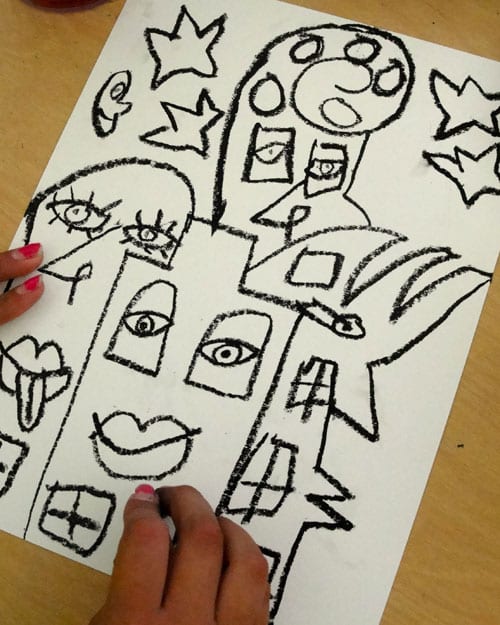
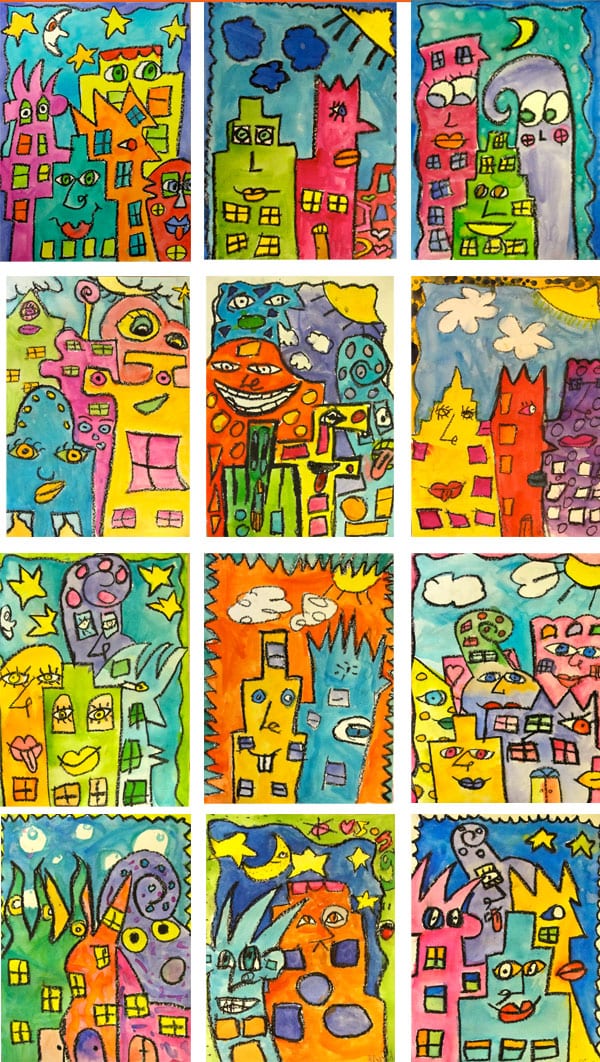
Aren’t these wonderful. This lesson didn’t take long; just TWO @ 50 minute classes. It helps to use small watercolor paper (9 x 12) to aid in the rapid completion of the project.
Sixth Grade Skyscrapers…
This post contains affiliate links
ARE YOU A SPARKLER? Over 300 art lessons are available inside the Members Club. Access to videos, resources & trainings for one low monthly fee.
CLICK THE IMAGE TO SIGN UP FOR NOTIFICATION OF OUR NEXT ENROLLMENT



just wondering about the paints you hae recommended.. do you think you have their new version or older stock. reading the reviews on blick didnt sound great, but considering what you have shown the colours look amazing. though others are saying the new stock is weaker?
really need to buy some new supplies for my little art group … especially since my daughter keeps checking your latest blog for inspiration (shes six )!
I’m not aware of the old stock vs new stock but this set works well. Keep in mind that I bought these for my upper grade kids (5-6) as I still believe that liquid watercolors are by far the best watercolor product for little kids.
My problem with the non-refillable sets is that when one color is gone the kids don’t want to use them. Love the lesson though.
You can buy Prang sets that are refillable. I have some that are refillable but they are sets of 8 colors. I agree though…once the color is gone, the work to restore begins!
In regard to watercolors: I don’t buy the boxes of watercolors- they don’t dry if the lid is closed on them, then kids have gloppy watercolors to use for the next class, and they end up going through it much faster than if they have a chance to dry. They also carry the box sideways and the colors drip all over the floor and leak all over each other. I have yet to find a good way to clean out the boxes as well. So,,,,, I only buy Prang refills from Dick Blick- they come in 12 packs of one color. I then put the colors on a tray and the kids paint from those. The trays can be used for mixing colors, I can limit the palettes I want kids to use, and I can quickly and easily remove the watercolors and wash the trays. Each watercolor can be washed off as well if it gets polluted. The trays can stack and air can still get to the watercolors to dry. Hope this helps.
This is a really great tip. I don’t think it had ever occurred to me to use my refills in this manner. Thanks for sharing!
These were really cool to look at. We did a couple of them at school and I had a lot of fun doing it.
Do you only use water colour or can you use different paints
Hi Cora!
Do get this effect (watercolor resist) you’ll need to stick to watercolors.
Liquid watercolors will give the best color pay off 🙂
-Hannah (Team Sparkle)
A friend of mine has a James Rizzi artwork framed in their home.
The ones with a city or harbor/beach — it often looks like a ‘Wheres Waldo’ picture with layers in 3D.
They have had theirs since the 1980’s. Love Rizzi
Very cool!
Patty,
I love seeing new Rizzi lessons. I like the interpretation you did with students. My students love Rizzi too!
Love, Love, Love these paintings Patty. Just recently discovered Rizzi on the blogs and am looking forward to designing a lesson for my classes. Thanks for sharing such a great project!
The samples shown are actually better than what the artist creates – Congratulatons!
I looked around on your site for more instructions about how to start a project like this… I am a teacher who is rather challenged in the area of art, and don’t know how to begin a lesson like this. For example, is it easier to start by drawing the eyes first? What comes next, the nose? I realize it will all come out different for each person, but I just can’t think of where to even start something this amazing! Do you have any suggestions? (I looked into buying a lesson plan book, but didn’t see one for this project, nor for the line-drawing robots I loved also…)
Like I say in my post, I like starting with the eyes and then moving to the nose. Sorry I didn’t include a full tutorial. I don’t for every lesson. Some are just meant to experiment with. Try picking up an oil pastel, look at the pictures and give it a go. They’re really fun!
I can see why the kids loved this lesson. I love it too.
I LOVE Rizzi!!
I am teaching home school art class 4-6
What name of watercolors recommended for this work….luv his work….this is what we will be starting with next week…
I use blick liquid watercolors and Prang watercolor tray/paints. Any watercolors would work well. Make sure they are transparent watercolors and not opaque tempera.
Funny and beautiful. Thank for your condivision
Hi Patty, I am a prac teacher I would like to do this for my year 6 class, it looks amazing! You suggested two 50 minute lessons to complete. Can you please give me a rough breakdown of how long you spent discussing Rizzi and his techniques versus the students drawing and painting?
Thank you,
Sascha
Very little time actually. No more than 10 minutes. I optimized every minute with my students so we could create art. Once I introduced the artist, we got busy creating.
Right! Did this with my kids!!
I am so happy that you introduced me to James Rizzi!!!
I am going to try these myself. I am not a teacher. I am raising 3 grandchildren and I think
we can have so much fun with this!
YAY!! Nancy that makes me so happy to hear!!
Enjoy💛✨
Thank you. I just loved the lessons and I will endeavour to undertake the them.
HELLO, I WANT TO BUY THE JAMES RIZZI BOOKS, NOT SURE WHICH ONES ARE HIS. PLEASE TELL ME
Love it, so easy and fun
What a fun project!