


October is Bullying Prevention Month, which is all about the social shift in your school to prevent bullying, so that children feel safe and supported in their school, community and online.
So what can you do in your art room to support bulling prevention? Well, a lot!
Let’s dive into some ways you can use the power of art to boost self-expression, empathy and confidence this month and throughout the year.
What is Social-Emotional Learning?
Social-emotional learning, or SEL, helps children build skills like understanding and expressing emotions, showing empathy, building healthy relationships and making thoughtful choices.
The art room gives students a natural place to practice many of those skills.
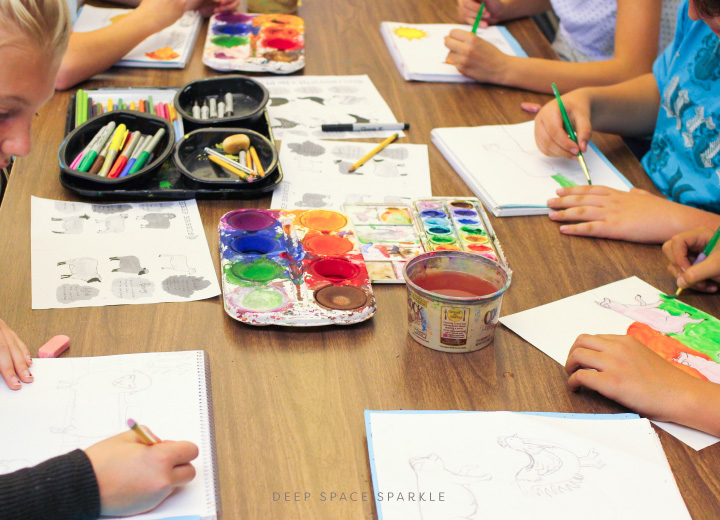
Here are a few age-appropriate ways to bring that into your lessons:
Youngest Artists
Provide your youngest artists with paper and coloring materials (paint sticks, crayons, oil pastels). They will be using the power of art to turn their blank paper into a rainbow that shows how they feel on the inside. So it won’t be in rainbow order, instead it will be different, mixed up colors that represent different feelings.
Starting with the largest band in the rainbow, invite students to choose a color that represents how they feel when they help a friend. Use one color to draw a thick rainbow band.
For the next color in the rainbow, choose a color that represents how they feel when someone is mean to them. Use one color to draw a thick band next to the first.
Emphasize how there are no “correct” colors to choose. Each artist gets to decide what the colors represent to them. Continue until the rainbow is complete.
Ask students to pick one of the colors and share about why they chose that color to represent that feeling.
Middle Grades
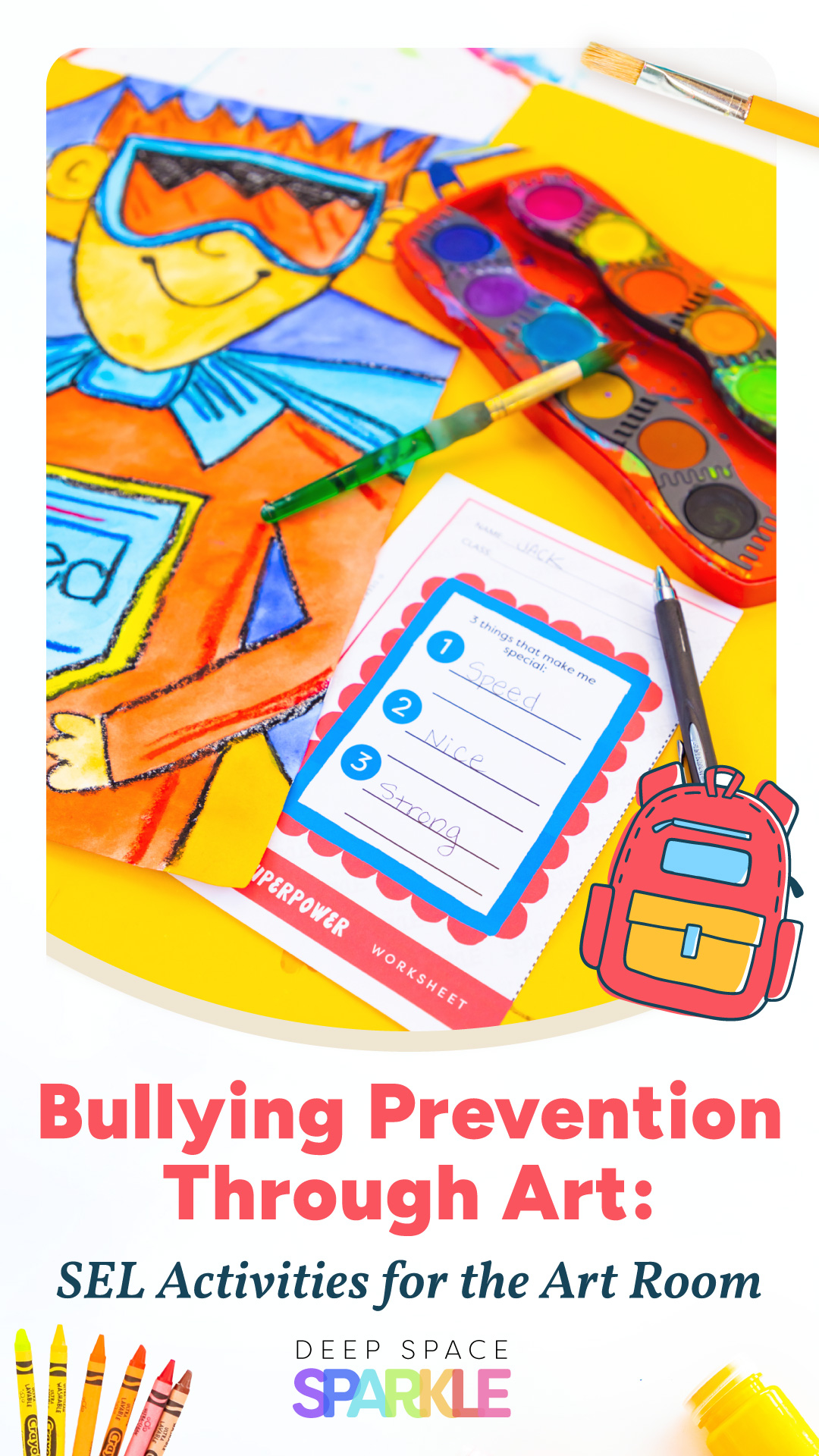
Invite children to draw a self-portrait reflecting something about themselves. And it doesn’t have to be a traditional self-portrait. Depictions of hobbies, favorite foods or personality traits can all be considered self-portraits.
Though hobbies like soccer, a favorite food of pizza or being known as a great gift-giver doesn’t define all of who we are, it is a facet of ourselves that we should be proud to share with others. It makes us unique, and we know that if everyone was the same, the world would be extremely boring.
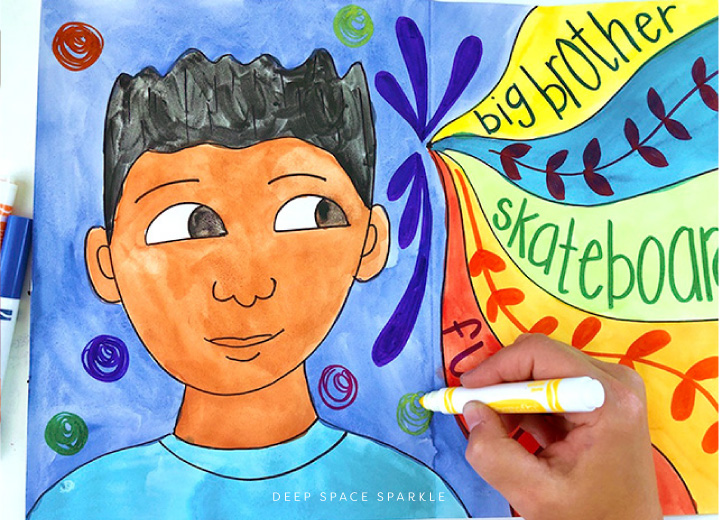
Use the second half of the class to have students share their artwork with a neighbor, table or the whole class. Remind them to be excited and proud to share what makes them special. Sometimes other people can bully because they are jealous that you are being yourself. As the teacher, model how to celebrate different qualities and interests of your students.
It will take bravery, but ask the students to provide positive comments to their fellow classmates about each other’s self-portraits. Again, model how to do this well so that the students know what comments are acceptable and what are unacceptable.
Sometimes it’s hard to share a compliment directly to someone, face to face. Art can be a powerful bridge to deliver a kind message to someone else.
Older Students
Though it seems like older students are “too cool” to talk about serious issues like bullying without making jokes, keep having the conversations. The more you talk with your students about bullying, the more likely they will be to come talk to you, other grown-ups and their peers when they see bullying or are a target for bullies. Keep having the conversations, despite the eye-rolls, in order to normalize talking about bully prevention.
After a discussion about the problems with bullying, invite kids to help combat it through the power of visual art. Have children work individually or in teams to create “No Bullying” posters. Give a few text examples such as “Be a Buddy, Not a Bully,” “It’s Rude to Exclude” or simply “Stop Bullying.” Then students can use their choice of supplies to add illustrations and color to their anti-bullying sign.
Hang the posters up in your art room to show that you are proud of their stand against bullying. Take the project a step further and make color copies of their work so that the posters can be hung up by the students around their school.
All School Collaborative Projects
Use the power of art to make a visually powerful stand against bullying with a large scale art piece that fills a bulletin board or wall of your school. Here are a few examples:
Sharing is Caring Collaborative Project
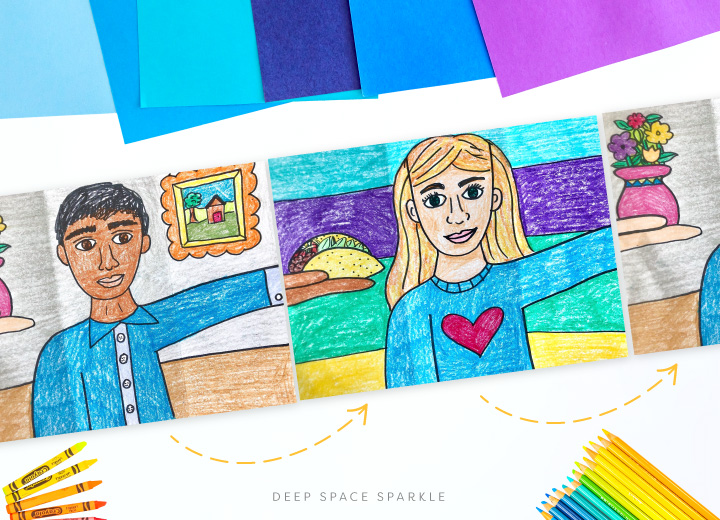
Literally pass along caring with this project where each student creates a self-portrait that connects with another student who is handing them a gift. Students will get to be surprised when all of the “incomplete” artwork is displayed together so that they can see how their artwork is completed by someone else. A visual display of how we are all “better together!”
Bright Future Self-Portraits
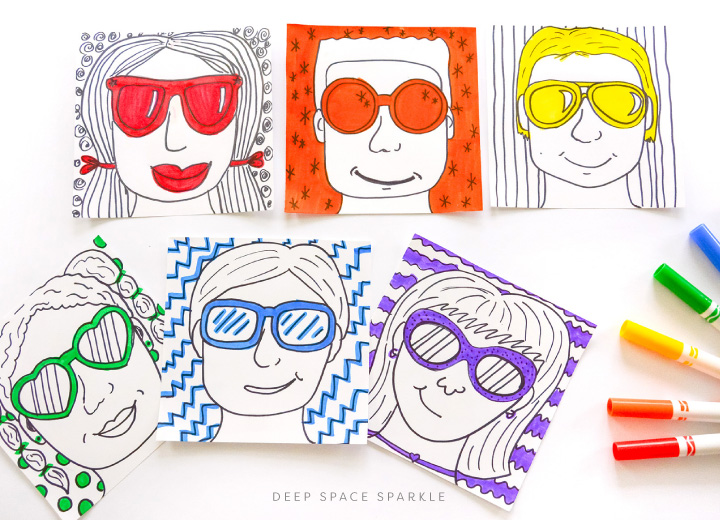
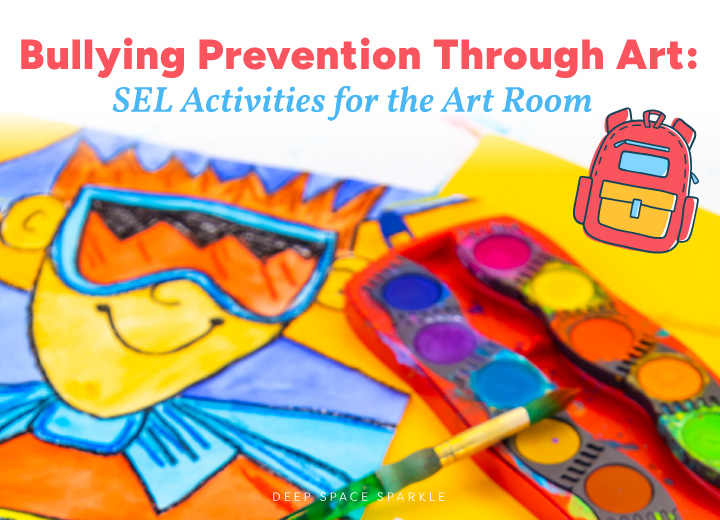
A quick self portrait that uses just a few colors of marker can result in a powerful display of each student’s unique qualities, from which sunglasses they decided to select to the color they chose to use for a patterned background. Just one of these self-portraits is special but imagine how amazing these will look all displayed together as a representation of your school.
Everybody in the Building
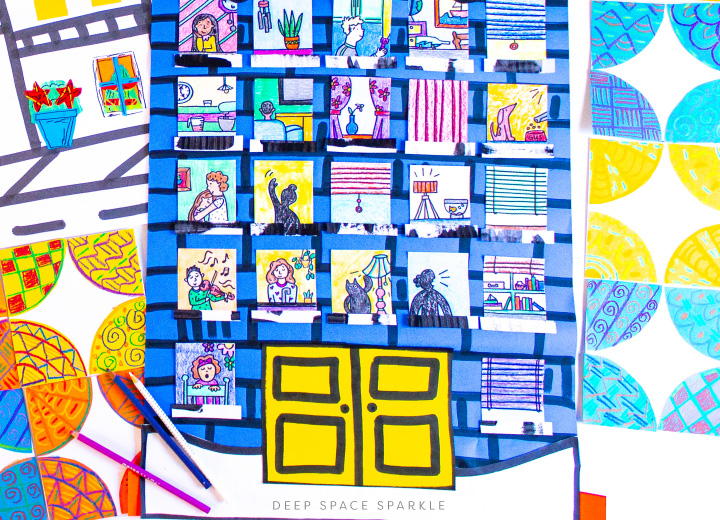
No one should feel excluded from their place in the school building. Create a visual representation of everyone’s prominent and important place in your school with a large-scale paper school building, giving everyone a small paper (tip: use sticky notes!) that will turn into a window. Invite students to draw a miniature self-portrait of themselves and then glue it to the building’s grid of windows.
Art gives students so many ways to practice self-expression, empathy, confidence and collaboration, whether they’re working independently or creating something together.
Inside The Sparklers’ Club, you’ll find even more ways to build those experiences into your art room throughout the year.
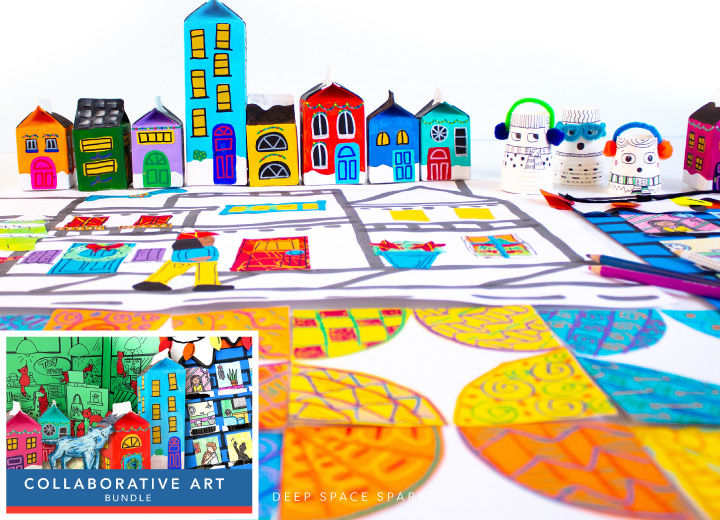
Create visual representations of unity and teamwork with lessons from the Collaborative Art Bundle. Small groups of students or a whole school can work together to create stunning art displays that showcase contributions from everyone.
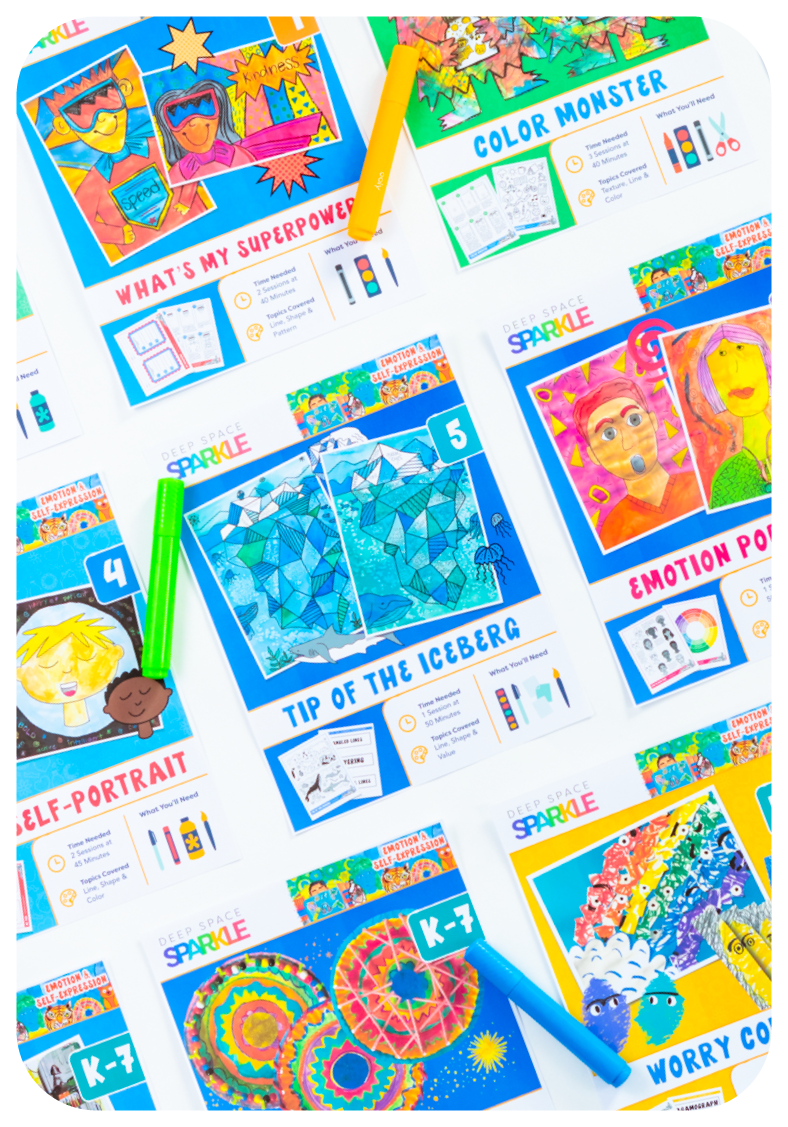
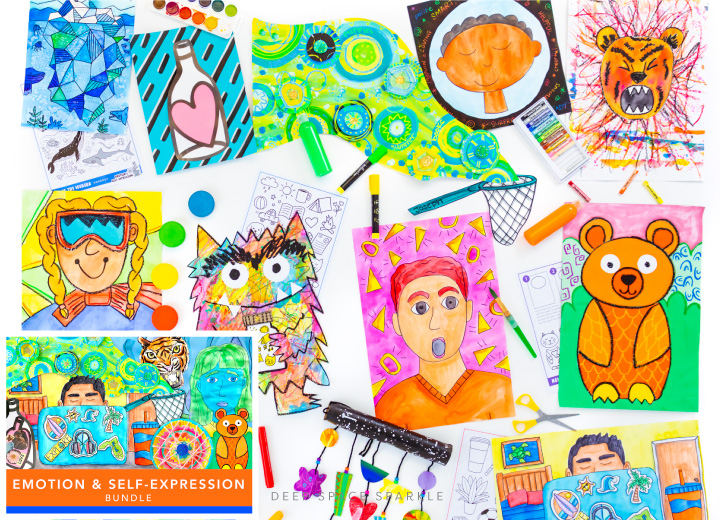
The Emotion & Self-Expression Bundle is an exploration of personality and feelings. Self-expression lessons for each grade level round out this Bundle as students take time to explore and celebrate their own unique personality through superpowers, symbols, words and emotions.
Click here to join The Sparklers’ Club waitlist and be the first to know when enrollment opens in 2027.
Pin me!